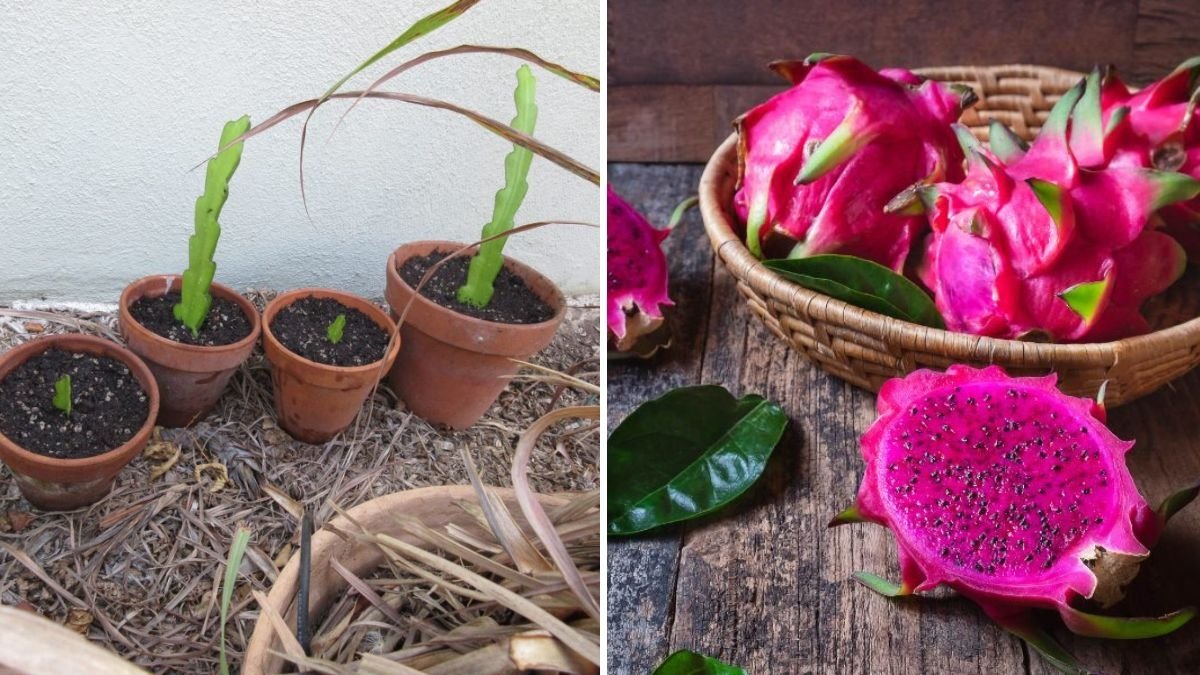
Dragon fruit, also known as pitaya, is one of the most exotic and visually stunning fruits you can grow at home. With its bright pink or yellow skin, speckled flesh, and refreshing sweetness, this tropical cactus plant not only produces delicious fruit but also adds a touch of beauty to your garden or balcony. The good news? You can grow dragon fruit easily in containers — even if you live in a small space or don’t have a backyard!
In this detailed, step-by-step guide, we’ll walk you through everything you need to know about growing dragon fruit from stem cuttings in containers, from preparation and planting to care and harvest.
1. Understanding the Dragon Fruit Plant
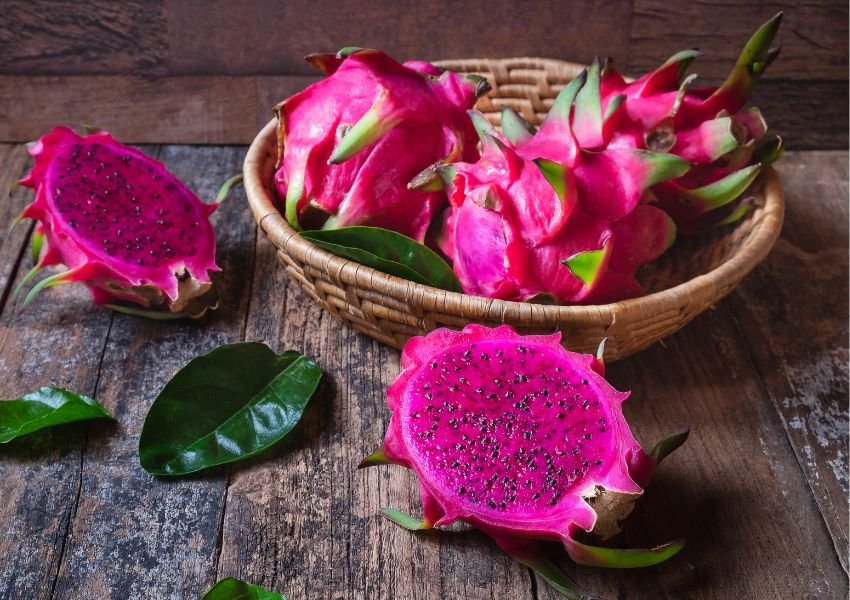
Dragon fruit comes from a climbing cactus species known as Hylocereus. It thrives in tropical and subtropical climates, but when grown in containers, it can adapt well to different environments with the right care.
There are three main types of dragon fruit:
- White-fleshed (Hylocereus undatus): Pink skin with white flesh — the most common type.
- Red-fleshed (Hylocereus costaricensis): Pink-red skin with deep red flesh and sweeter taste.
- Yellow dragon fruit (Selenicereus megalanthus): Yellow skin and white flesh — smaller but very sweet.
Dragon fruit plants are fast-growing, drought-tolerant, and can live for decades if maintained properly. Because they are climbing cacti, they need support to grow upward and produce more fruit.

2. Why Grow Dragon Fruit in Containers?
Growing dragon fruit in containers has several advantages:
- Space-saving: Perfect for balconies, patios, or small gardens.
- Easy to manage: You can move the pot for sunlight or protection during harsh weather.
- Pest control: Easier to monitor and prevent pest infestations.
- Controlled growth: Ideal for beginners or urban gardeners.
With the right setup and patience, you can enjoy multiple harvests every year once your plant matures.
3. Materials You’ll Need
Before you begin, gather these basic items:
- A healthy dragon fruit stem cutting (12–15 inches long)
- A large container (at least 15–20 inches deep and wide)
- Well-draining potting mix (cactus mix or sandy loam soil)
- Perlite or sand for aeration
- A sturdy support pole or trellis
- Watering can or spray bottle
- Organic compost or fertilizer
If you’re using a recycled container, make sure it has good drainage holes at the bottom.
4. Preparing the Dragon Fruit Cutting
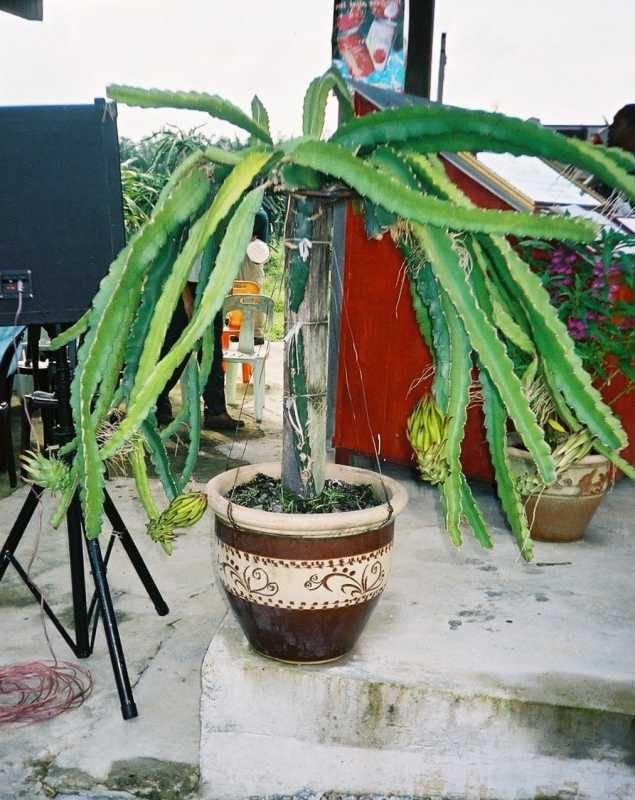
Growing dragon fruit from seed takes years, but using a stem cutting allows you to get fruit much faster — usually within 1–2 years.

Here’s how to prepare the cutting properly:
- Choose a Healthy Parent Plant:
Look for a mature dragon fruit plant that’s free from pests and diseases. - Cut a Healthy Segment:
Using a sterilized knife, cut a 12–15 inch segment of the stem. The cutting should have at least 3–4 ribs or “arms.” - Let It Heal:
Place the cutting in a shaded, dry place for 5–7 days to allow the cut end to callous over.
This step is essential — it prevents rot when planted in soil.
Once the cutting is dry and firm at the base, it’s ready for planting.
5. Preparing the Container and Soil
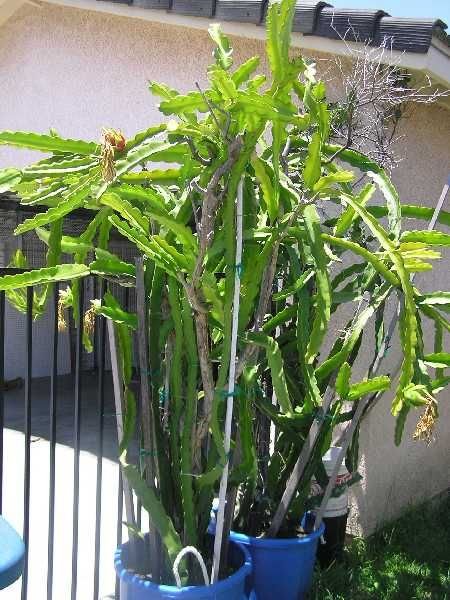
Dragon fruit prefers well-draining, slightly acidic soil (pH 6–7). Poor drainage can lead to root rot, so make sure your container and soil are both suitable.
Step 1: Choose the Right Container
- Pick a large, deep pot (minimum 15 gallons) with several drainage holes.
- You can use a plastic, ceramic, or concrete pot — just ensure it allows excess water to escape.
Step 2: Prepare the Soil Mix
Mix the following for best results:
- 50% garden soil or cactus potting mix
- 25% sand or perlite
- 25% organic compost or coco peat
This combination keeps the soil light, aerated, and nutrient-rich.

Step 3: Add Support
Insert a wooden or concrete pole in the center of the container. Dragon fruit vines will climb this support as they grow. A trellis or a round frame at the top helps manage the plant’s weight during fruiting.
6. Planting the Cutting
Once your soil and container are ready, it’s time to plant the dragon fruit cutting.
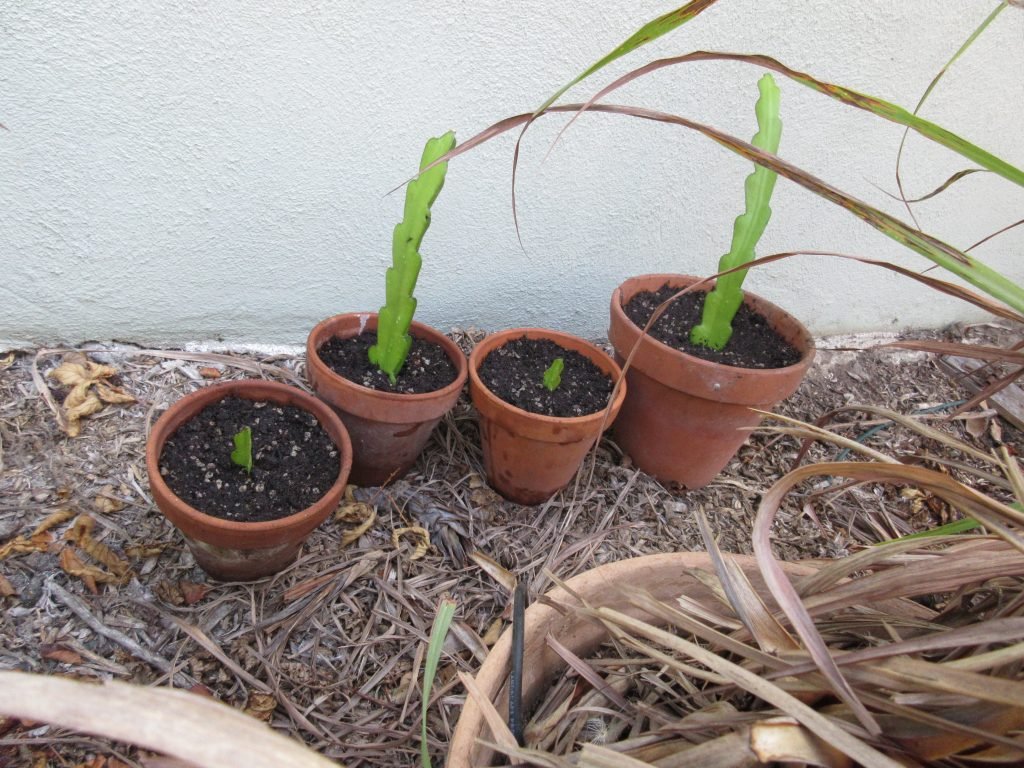
- Insert the Cutting:
Bury the calloused end of the cutting about 2–3 inches deep in the soil.
Make sure it’s upright and close to the support pole. - Firm the Soil:
Gently press the soil around the base to keep the cutting stable. - Initial Watering:
Lightly water the soil — just enough to make it slightly moist.
Avoid overwatering at this stage, as the cutting can rot before rooting. - Placement:
Keep the container in bright, indirect sunlight for the first two weeks.
Once new growth appears, you can move it to a sunny location.
7. Caring for Your Dragon Fruit Plant
Proper care is crucial to help your dragon fruit grow strong and productive.
Watering:
- Water once or twice a week.
- Allow the soil to dry slightly between waterings.
- Reduce watering during the winter or rainy season.
Sunlight:
- Dragon fruit needs 6–8 hours of direct sunlight daily.
- If growing indoors, place near a south-facing window or use grow lights.
Fertilizing:
- Feed the plant with balanced fertilizer (10-10-10) once a month during the growing season.
- You can also use organic compost or worm castings for natural nutrition.
- Stop fertilizing during dormancy (usually winter months).
Pruning:
- Prune excess side branches to encourage vertical growth.
- Remove any damaged or diseased stems.
- Once the plant reaches the top of the pole, allow it to branch out horizontally — this is where flowers and fruits form.
8. Supporting and Training the Vines
As a climbing cactus, dragon fruit needs strong support to grow upright and bear fruit efficiently.
- Tie the main stem loosely to the pole using soft garden ties.
- When it reaches the top, let the branches droop over the frame — this triggers flowering.
- Avoid letting the vine sprawl uncontrolled, as it can lead to tangled, weak growth.
9. Flowering and Pollination
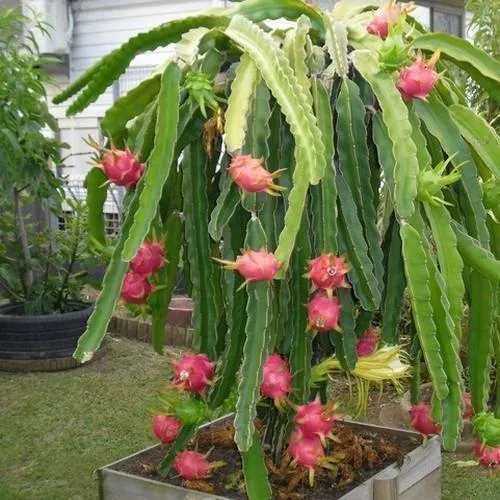
Dragon fruit plants typically start flowering within 8–12 months of planting. The large, fragrant white flowers bloom at night and last only one day — making them quite a sight!

- Most varieties are self-pollinating, but some may require hand pollination.
- To hand-pollinate, use a small brush to transfer pollen from the stamens (male part) to the stigma (female part).
- Do this late at night or early morning while the flower is open.
Within a few weeks, the pollinated flowers will develop into small green fruits that gradually turn pink or yellow as they ripen.
10. Harvesting Dragon Fruit
Dragon fruits are usually ready for harvest 30–50 days after flowering. You’ll know they’re ripe when:
- The fruit’s color changes to bright pink or yellow.
- The small scales on the skin start to dry slightly.
- The fruit gives a gentle yield when pressed.
Use garden scissors or a knife to cut the fruit off the stem — don’t twist or pull. Freshly harvested dragon fruits are juicy, mildly sweet, and packed with nutrients like vitamin C, magnesium, and antioxidants.
11. Common Problems and Solutions
| Problem | Cause | Solution |
|---|---|---|
| Stem rot | Overwatering | Improve drainage, water less frequently |
| Yellowing stems | Too much sunlight or nutrient deficiency | Move to partial shade, add organic compost |
| No flowers/fruits | Lack of sunlight or pruning | Ensure 6+ hours of light, prune to encourage flowering |
| Pests (aphids, ants) | Poor airflow or excess moisture | Use neem oil or organic insecticide spray |
With the right care, dragon fruit plants are relatively low-maintenance and resilient.
12. Final Tips for Success
- Always use a sturdy support system to manage growth and fruit load.
- Keep pruning regularly to prevent overcrowding.
- Repot your dragon fruit every 2–3 years to refresh the soil and encourage healthy root growth.
- Be patient — mature plants can yield 20–30 fruits or more per year once established!
13. Conclusion
Growing dragon fruit in containers is one of the most rewarding gardening projects you can undertake. From the moment you plant a simple stem cutting to the day you harvest your first vivid pink fruit, every step of the journey is filled with excitement and satisfaction.

Whether you live in an apartment, on a balcony, or have limited outdoor space, this container-growing method ensures you can enjoy fresh, homegrown dragon fruits right at home. With proper care, sunlight, and a little patience, your dragon fruit plant will thrive for years, producing both beauty and bounty.
So go ahead — grab a healthy cutting, prepare your container, and start growing your own dragon fruit today! It’s easier than you think, and the results are absolutely delicious.

Leave A Comment