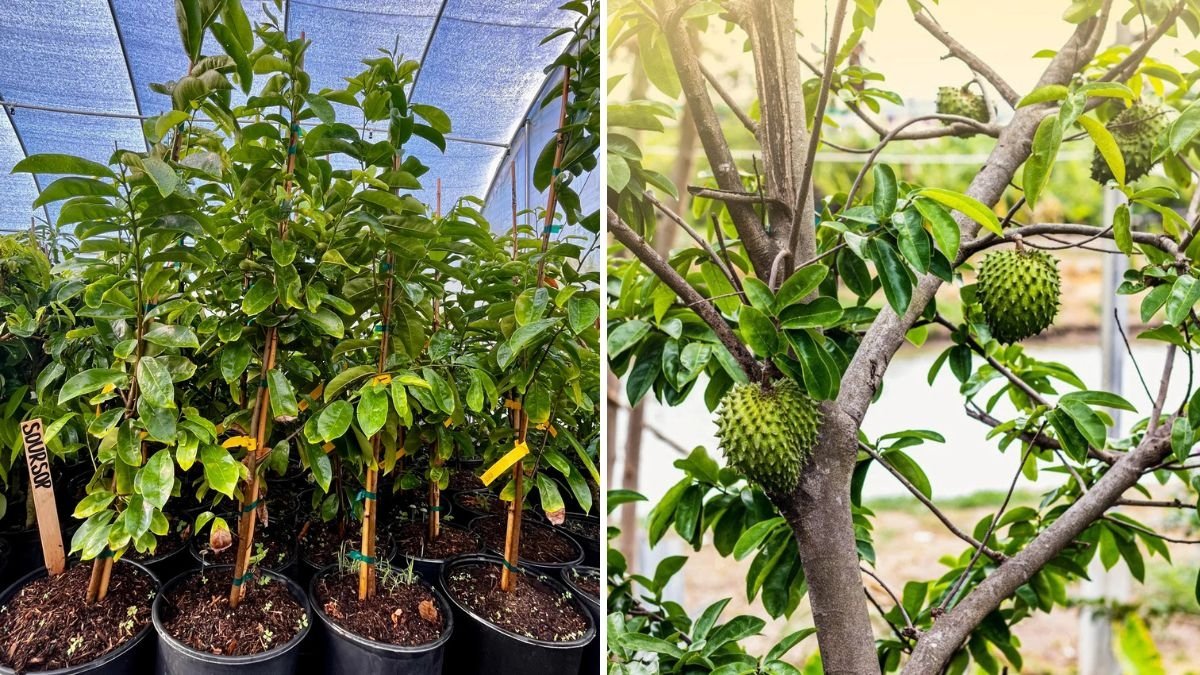
The soursop tree, also known as guanabana or graviola, is a tropical gem celebrated for its spiky green fruit and sweet, creamy pulp. Its distinct flavor—a mix of strawberry, pineapple, and citrus—makes it a favorite for juices, desserts, and natural remedies. Growing your own “giant” soursop tree in the ground is not only rewarding but also surprisingly simple when done with the right preparation and care.
In this comprehensive DIY guide, I’ll share a detailed journey of planting and growing a giant soursop tree directly in the ground—from choosing the right location and soil preparation to watering, fertilizing, and protecting the plant. Whether you’re a tropical fruit enthusiast or a first-time grower, this guide will help you cultivate your own thriving guanabana tree at home.
1. Why Grow a Giant Soursop Tree?
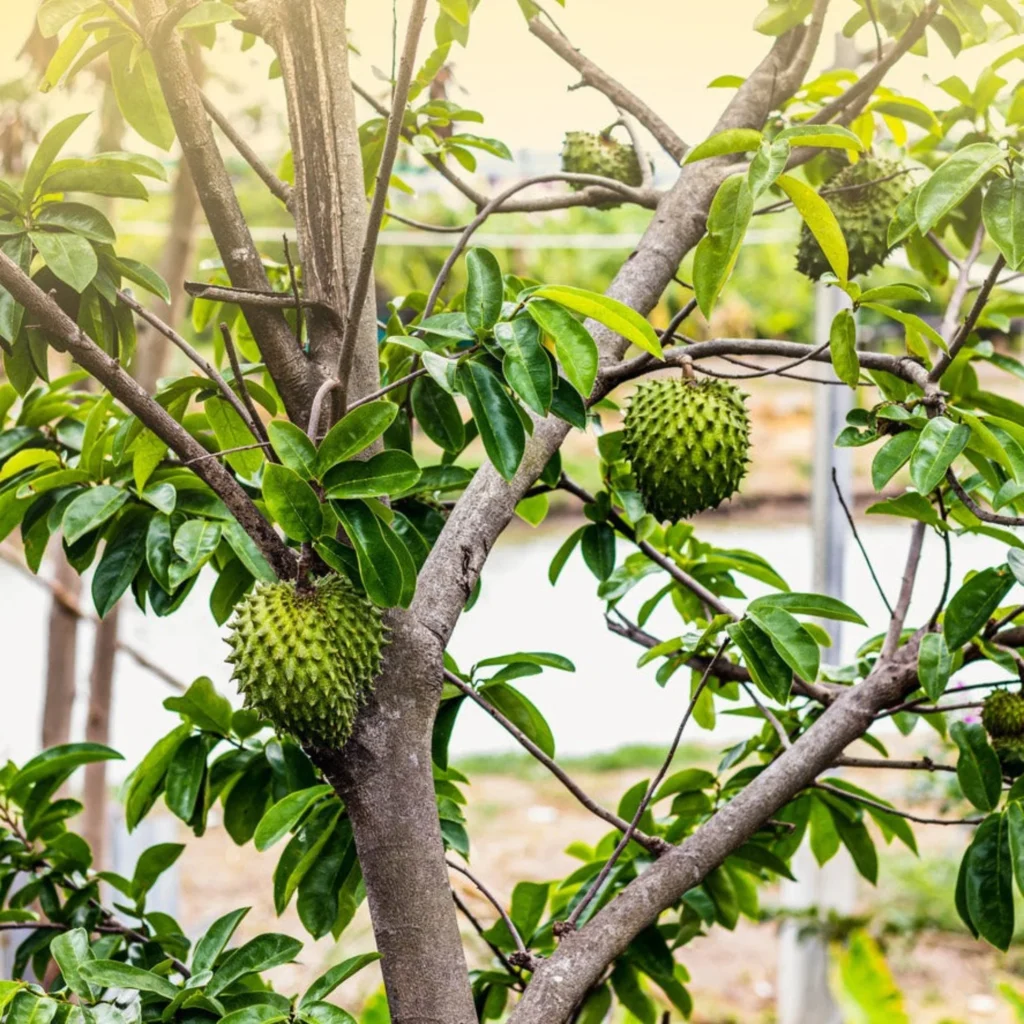
Soursop (Annona muricata) isn’t just a fruit tree—it’s a powerhouse of nutrition and natural health benefits. The fruit contains high levels of vitamin C, antioxidants, and unique compounds believed to boost immunity and energy. Beyond its health benefits, the soursop tree also brings lush greenery and tropical beauty to your garden.
Growing a giant soursop means cultivating a tree that can eventually reach up to 20 feet tall with strong, productive branches that bear multiple large fruits. When planted directly in the ground instead of containers, the roots have more room to spread, allowing faster growth, stronger structure, and higher fruit yield.
So, if you’re ready to grow your own “giant,” it’s time to get your hands in the soil!
2. Choosing the Perfect Location
The first and most critical step in growing soursop successfully is location selection. Soursop thrives in tropical and subtropical climates where the temperature stays consistently warm throughout the year.
Ideal conditions include:
- Sunlight: Full sun exposure for at least 6–8 hours daily.
- Temperature: 25°C to 32°C (77°F to 90°F). Avoid frost-prone or extremely cold areas.
- Wind Protection: Soursop trees have large, delicate leaves that can tear easily in strong winds. Choose a spot shielded by a wall, fence, or other trees.
- Drainage: The area must not retain water after heavy rainfall; waterlogging can quickly lead to root rot.
If your garden has heavy clay soil, it’s best to plant on a slightly elevated mound to improve drainage.

3. Preparing the Planting Site
Once you’ve chosen the perfect location, it’s time to prepare the ground for your soursop tree. The preparation step ensures the roots can expand easily and absorb the nutrients they need for healthy growth.
Step 1: Clear the area
Remove any weeds, grass, or debris from the planting site. Clear an area of at least 1.5 meters (5 feet) in diameter.
Step 2: Dig the planting hole
Dig a hole that’s about 60–70 cm deep and 60–70 cm wide. The size of the hole is crucial because it gives the roots space to spread and helps you fill it with nutrient-rich soil.
Step 3: Prepare the soil mix
Soursop trees prefer loamy, slightly acidic soil (pH 5.5–6.5). If your native soil is too heavy or sandy, improve it with organic matter.
Mix the following ingredients:
- 50% garden soil
- 30% compost or aged manure
- 10% sand or perlite for aeration
- 10% cocopeat or leaf mold for moisture retention
Add a handful of bone meal or wood ash to boost calcium and potassium levels, which promote healthy root growth and strong stems.
4. Selecting the Right Soursop Seedling
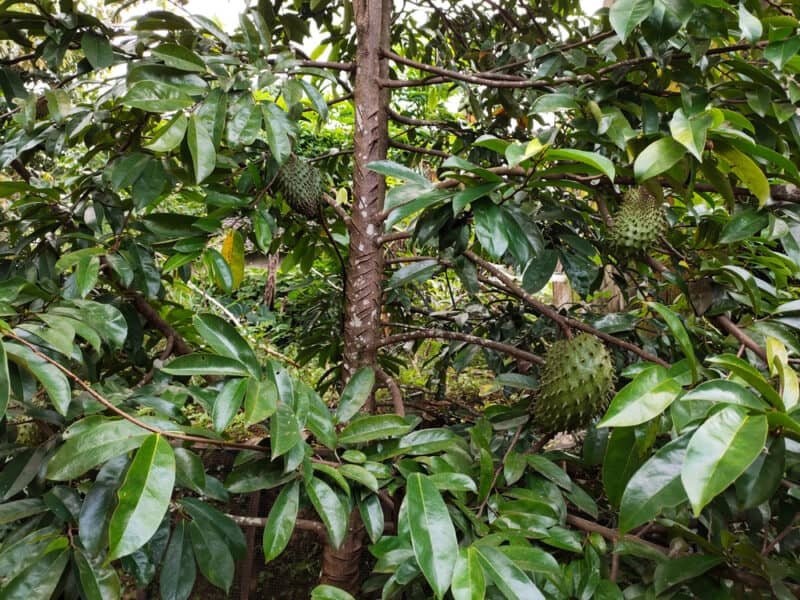
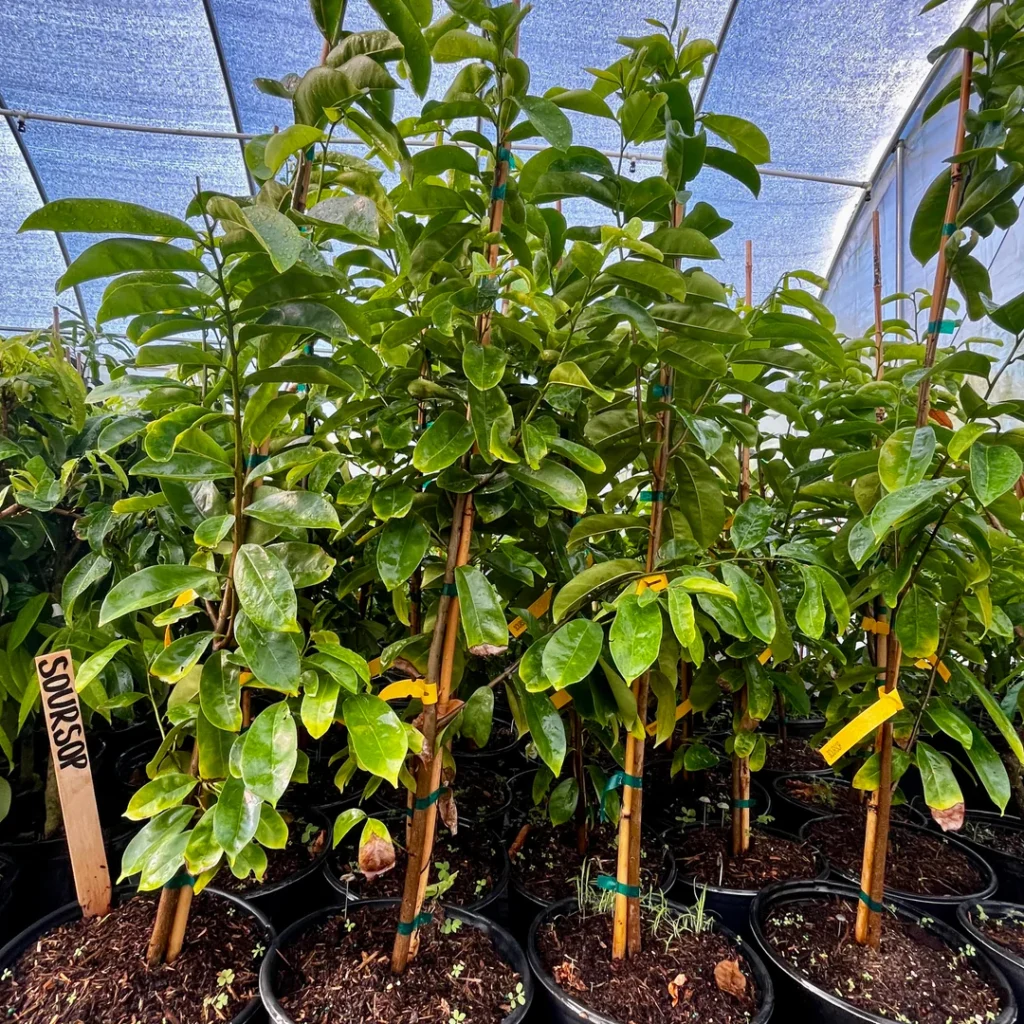
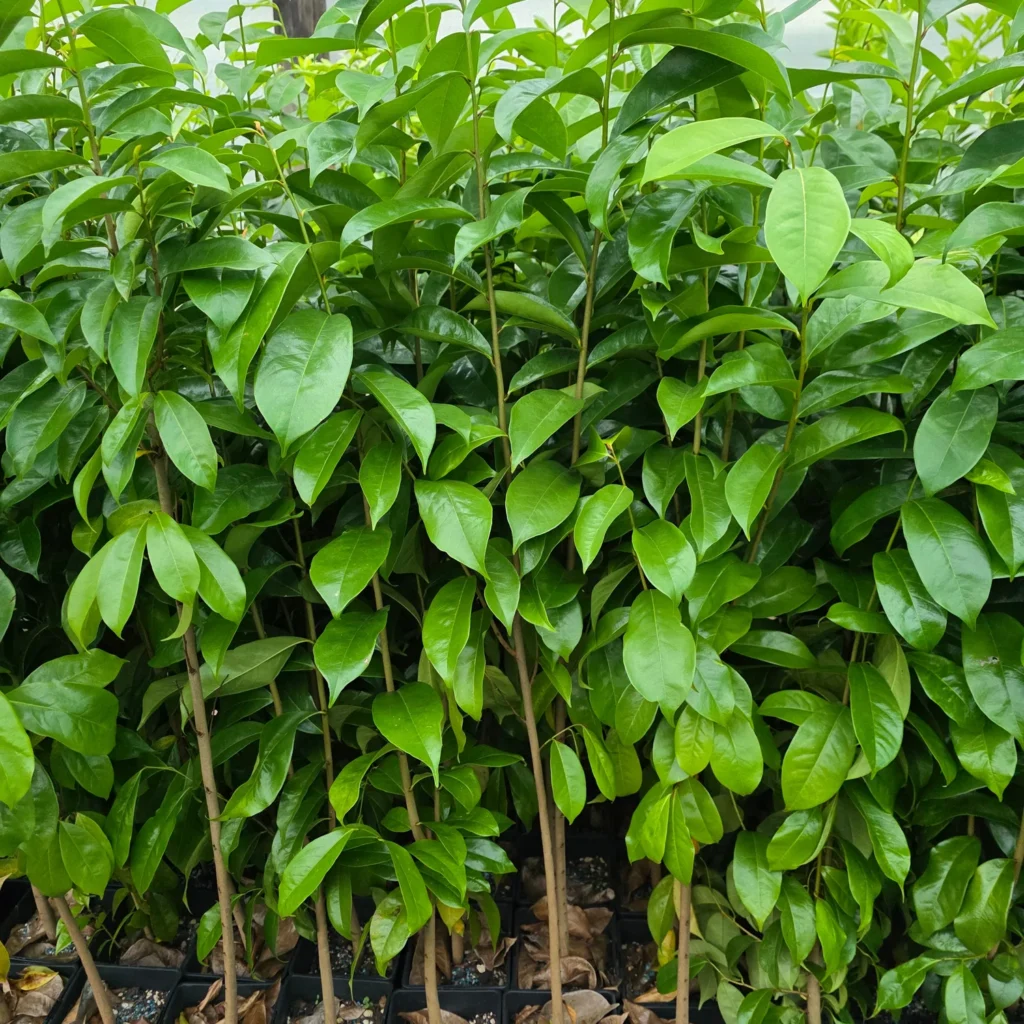
Choose a healthy, disease-free soursop seedling from a reputable nursery. You can grow soursop from seeds, but grafted or nursery-grown seedlings are preferred because they:
- Bear fruit earlier (in 3–4 years instead of 5–6).
- Are more resilient against pests and diseases.
- Have predictable fruit size and quality.
Inspect the plant carefully:

- The leaves should be glossy and dark green.
- The stem should be sturdy and upright.
- There should be no visible signs of fungus or root damage.
5. Planting the Soursop Tree in the Ground
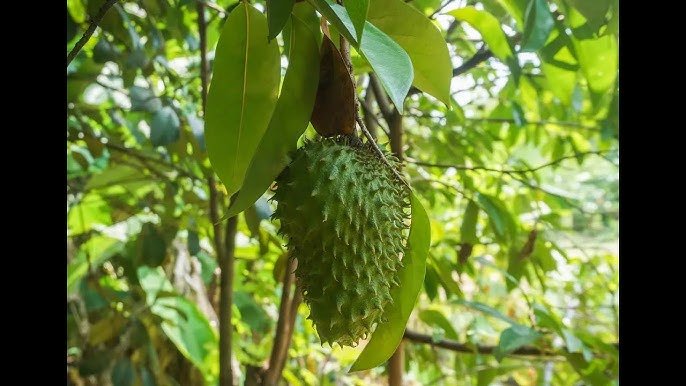
Now comes the most exciting part—planting your giant soursop!
Step 1: Gently remove the seedling from its pot without disturbing the roots. If it’s root-bound, lightly loosen the roots with your fingers.
Step 2: Place the seedling in the center of the hole. Make sure the root ball is level with the surrounding soil—don’t bury it too deep.
Step 3: Fill the hole with your prepared soil mix, pressing lightly to remove air pockets. Leave a small basin-like depression around the base to collect water.
Step 4: Water the plant deeply right after planting. This helps settle the soil and provides moisture to the roots.
Step 5: Apply a thick layer (5–8 cm) of organic mulch (like straw, dried leaves, or coconut husk) around the base. This helps retain moisture, regulate soil temperature, and suppress weeds.
6. Watering and Early Care
During the first year, your soursop tree will focus mainly on root and branch development. Consistent watering is vital, especially in hot weather.
Watering tips:
- Water deeply 2–3 times a week during dry seasons.
- Reduce watering during the rainy season, ensuring soil doesn’t stay soggy.
- Always water at the base, avoiding wetting the leaves to prevent fungal growth.
A DIY drip irrigation system using a plastic bottle can also help maintain steady moisture. Poke a few small holes in the cap, fill the bottle with water, and place it upside down near the roots—this allows slow, continuous watering.
7. Fertilizing for Strong Growth
Fertilization plays a key role in helping your soursop grow large, healthy, and fruitful. Use a balanced mix of organic and mineral nutrients.
First year (young plant):
- Apply compost or organic fertilizer every 6–8 weeks.
- Use an NPK fertilizer (10-10-10) to encourage leaf and root development.
After the second year:
- Switch to fertilizers higher in potassium and phosphorus (5-10-15 or 8-12-20) to promote flowering and fruiting.
- Add micronutrients like magnesium and calcium through dolomite lime or seaweed extract.
Avoid over-fertilizing—too much nitrogen can cause excessive leafy growth but delay flowering.
8. Pruning and Maintenance
Regular pruning ensures your “giant” soursop grows strong and manageable.
Pruning steps:
- In the first year, pinch off the top of the main stem once it reaches about 1.2 meters to encourage side branches.
- Remove any weak, crossing, or inward-growing branches.
- Keep the canopy open for sunlight penetration and air circulation.
Pruning also helps the tree channel its energy into fruit production rather than unnecessary leaf growth.
9. Pest and Disease Control
Soursop trees can be prone to pests like fruit flies, aphids, and mealybugs, as well as fungal diseases in humid environments.
Natural pest control methods:
- Spray neem oil or garlic extract every 2–3 weeks.
- Use sticky traps to catch fruit flies.
- Keep the area around the tree clean and free from fallen leaves or fruit.
If you notice black spots or powdery mildew, prune the affected parts and apply a mild organic fungicide.
10. Flowering and Fruiting Stage
Your soursop tree typically starts to flower within 3–4 years (earlier if grafted). Flowers are yellowish-green and have a strong, sweet scent that attracts pollinators.
Encourage flowering by:
- Providing full sunlight.
- Reducing nitrogen fertilizer before the flowering season.
- Maintaining consistent watering during bud formation.
Once pollinated, the fruits develop slowly and mature in 4–5 months. Each fruit can weigh between 2 to 6 kilograms, depending on variety and care—truly a “giant” reward for your patience!
11. Harvesting Your Giant Soursop
Knowing when to harvest is crucial for the best taste and texture. Soursop fruits are ready to pick when:
- The green skin turns slightly yellowish.
- The spines become softer.
- The fruit gives slightly when pressed gently.
Always harvest by cutting the stem instead of pulling the fruit. Handle it carefully, as soursop bruises easily.
After harvesting, you can refrigerate it for up to a week or use it immediately for smoothies, ice cream, or juice.
12. Long-Term Care and Sustainability Tips
Your soursop tree can live and produce for over 10 years with proper maintenance.
Here’s how to ensure long-term success:
- Reapply compost around the base every 6 months.
- Replace mulch regularly to maintain soil health.
- Water consistently during fruiting seasons.
- Allow bees and natural pollinators to access the flowers—avoid using chemical sprays.
Planting companion plants like lemongrass or marigold nearby can help repel pests naturally and improve biodiversity.
Conclusion
Planting a giant soursop (guanabana) tree in the ground is more than just a gardening project—it’s a journey of patience, nurturing, and reward. With proper care, your tree can become a lush centerpiece in your garden, offering shade, beauty, and delicious fruits season after season.
From soil preparation to harvesting, every step contributes to building a strong foundation for a fruitful future. So roll up your sleeves, grab your shovel, and start planting your very own “giant” soursop today—you’ll soon enjoy the satisfaction of tasting tropical sweetness straight from your backyard.

Leave A Comment