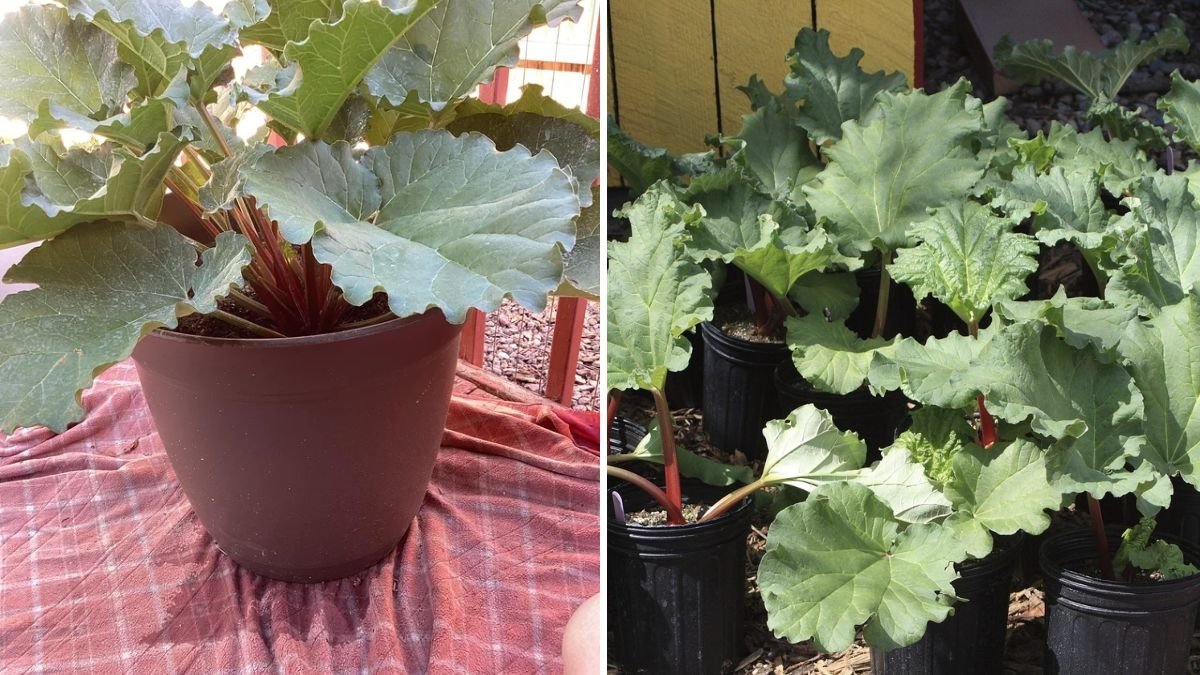
If you love the tangy-sweet flavor of rhubarb pies, jams, or desserts but don’t have much space for a traditional garden, here’s great news — you can easily grow rhubarb in a pot! Rhubarb is a hardy perennial vegetable (often treated like a fruit in cooking) that adapts well to container growing when given the right care. Whether you’re a beginner gardener or looking for a compact way to grow more food at home, this guide will walk you through how to grow rhubarb in a pot—from planting to harvest.
Understanding Rhubarb
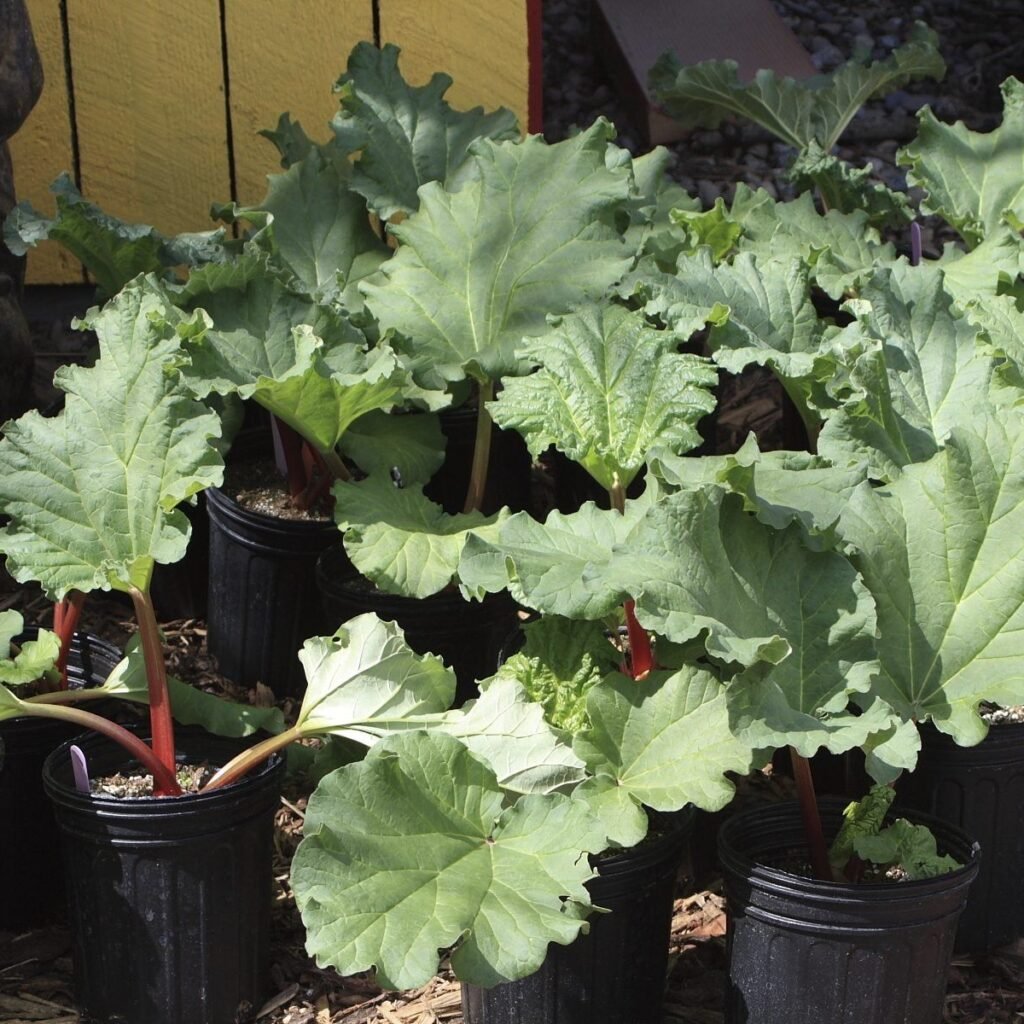
Rhubarb (Rheum rhabarbarum) is a cool-season perennial known for its large green leaves and thick, red or pink edible stalks. It’s one of the easiest crops to grow, thriving for years with minimal attention. However, it’s important to note that only the stalks are edible—the leaves contain oxalic acid and are toxic to humans and pets.
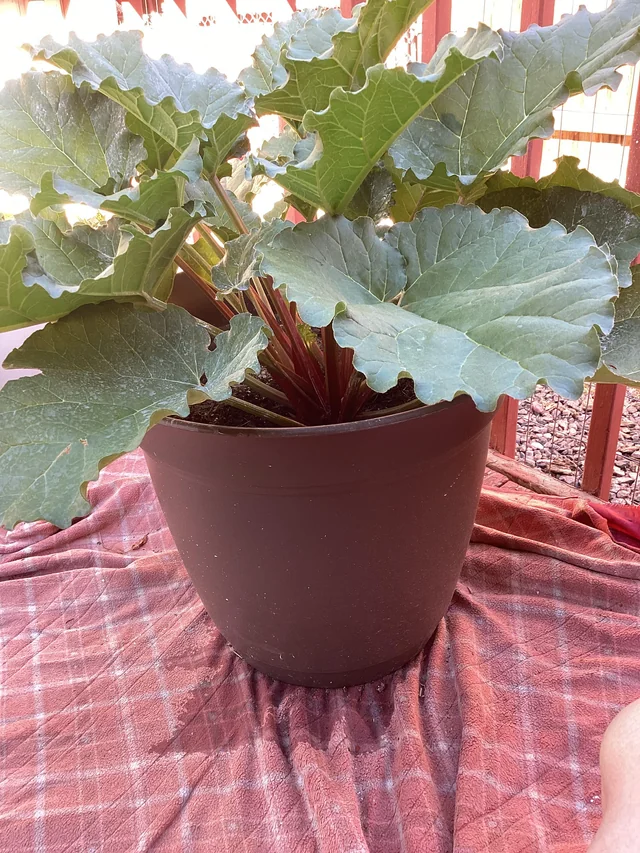
When grown in containers, rhubarb offers an attractive, leafy addition to patios, balconies, or decks. With proper soil, water, and feeding, potted rhubarb can be just as productive as those grown in garden beds.
Choosing the Right Variety for Containers
Not all rhubarb varieties are equal when it comes to container growing. You’ll want to pick compact or high-yielding varieties that adapt well to smaller spaces. Some excellent options include:
- Victoria: A classic, reliable, and easy-to-grow variety with greenish-red stalks.
- Canada Red: Deep red stalks and a sweeter flavor—ideal for desserts.
- Glaskin’s Perpetual: A great option for continuous harvesting and fast growth.
- Timperley Early: Known for early harvests and robust growth even in cooler climates.
These varieties are known for their resilience and productivity, even in pots.
Choosing the Right Pot and Location
Rhubarb has deep roots, so container size is crucial. A pot that’s too small can stunt growth or dry out too quickly.
- Container Size: At least 20–24 inches in diameter and 18–24 inches deep.
- Material: Use large plastic, terracotta, or wooden planters with good drainage holes.
- Drainage: Add a layer of gravel or broken pottery at the bottom to prevent root rot.
Location Tip:
Place your rhubarb pot in a sunny spot where it can get 6–8 hours of direct sunlight daily. In hotter regions, a bit of afternoon shade helps protect the plant from stress.
Preparing the Soil
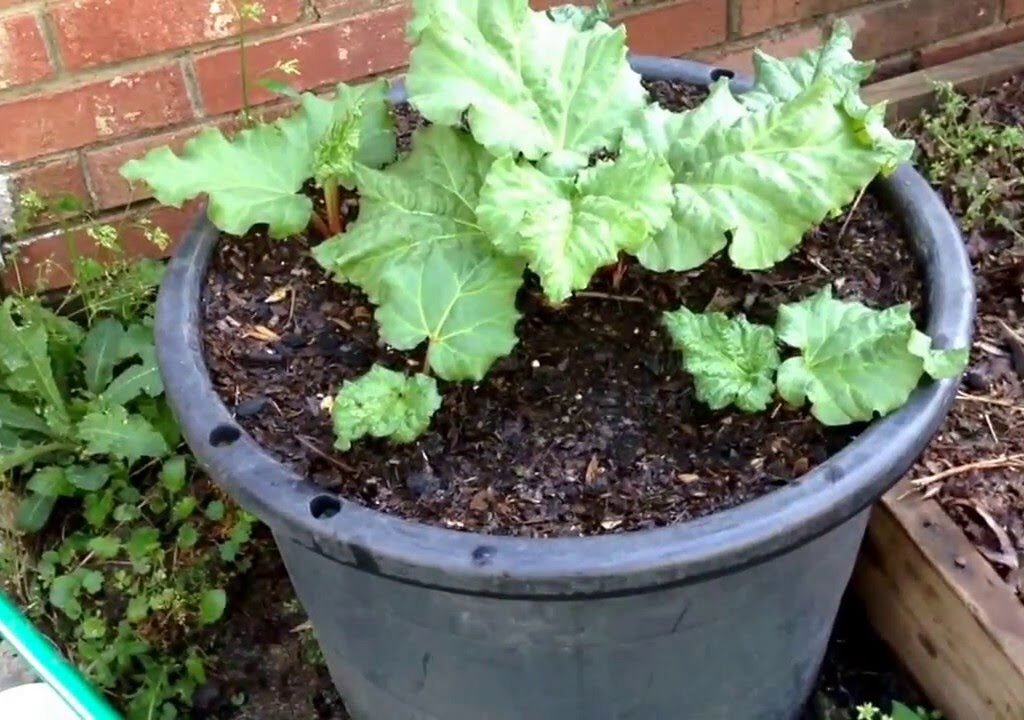
Rhubarb loves rich, fertile, and well-draining soil. In containers, the right mix is essential for root health and consistent growth.
Ideal Soil Mix:
- 1 part garden soil or compost
- 1 part peat moss or coconut coir (for moisture retention)
- 1 part perlite or coarse sand (for aeration)
You can also use a high-quality vegetable potting mix enriched with organic matter. Rhubarb prefers slightly acidic to neutral soil with a pH between 6.0 and 6.8.
Before planting, mix in a slow-release organic fertilizer or compost to provide nutrients for the long growing season.
Planting Rhubarb in Pots
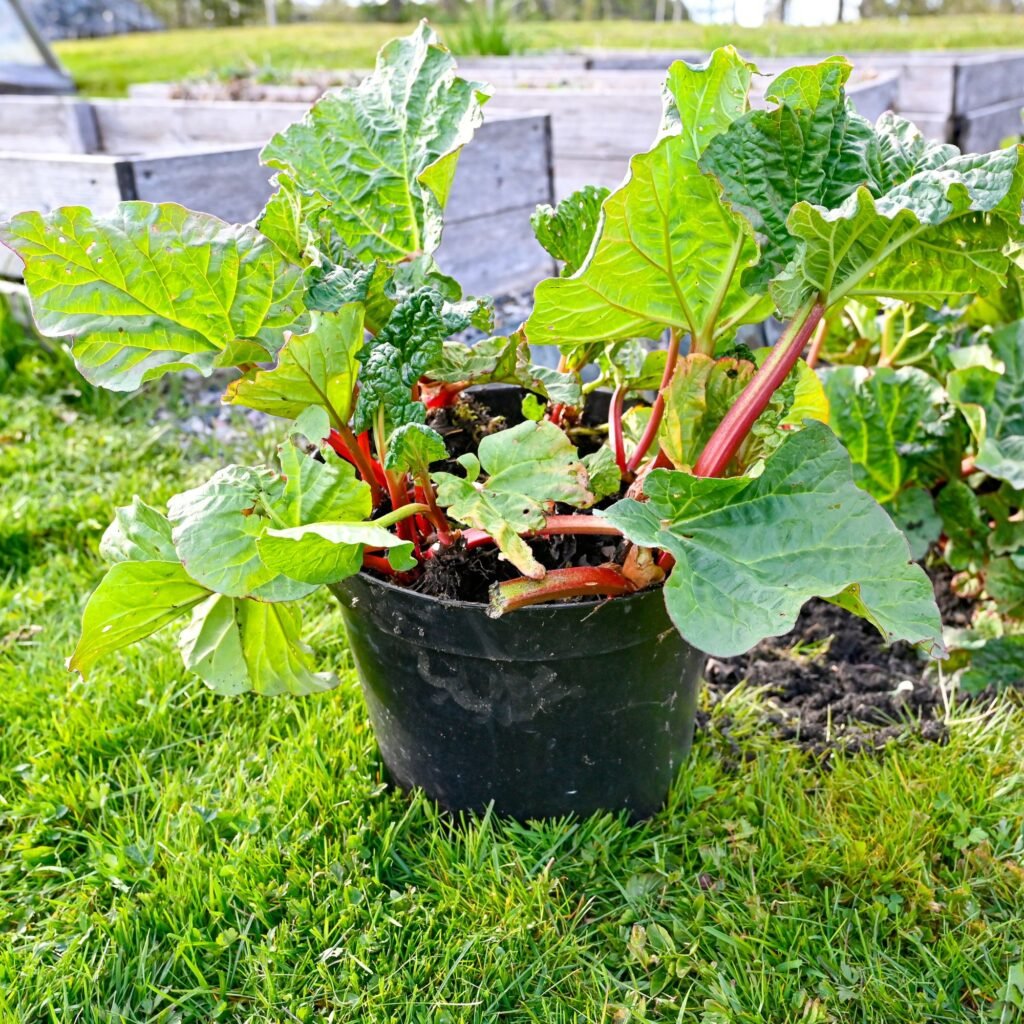
You can start rhubarb either from crowns (roots) or seeds, but crowns are faster and more reliable.
If Planting from Crowns:
- Fill the pot with your prepared soil mix, leaving a few inches at the top.
- Create a small mound in the center and spread the roots over it.
- Cover with soil, leaving the crown’s top just 1 inch below the surface.
- Water thoroughly to settle the soil and eliminate air pockets.
If Starting from Seed:
- Soak seeds in warm water for a few hours before planting.
- Sow seeds about ½ inch deep in small pots or seed trays.
- Keep the soil moist and warm (around 60–70°F or 15–21°C).
- Transplant seedlings into the large pot once they have a few true leaves.
Note: Seed-grown rhubarb takes about a year longer to mature compared to crown-planted ones.
Watering and Feeding Your Rhubarb
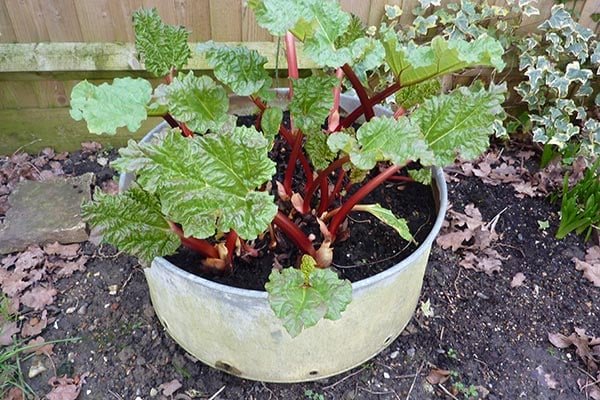
Rhubarb loves moisture but hates soggy soil. In containers, the balance is key.
Watering Tips:
- Keep the soil consistently moist, especially during dry or hot weather.
- Avoid waterlogging—empty saucers after watering to prevent root rot.
- Water early in the day so excess moisture can evaporate before nightfall.
Feeding Schedule:
- In early spring, top-dress with compost or organic manure.
- Every 4–6 weeks during the growing season, feed with a balanced liquid fertilizer (10-10-10).
- Stop fertilizing by mid-summer to allow the plant to prepare for dormancy.
For organic gardeners, seaweed extract or fish emulsion works wonderfully to promote healthy stalk growth.
Temperature and Light Needs
Rhubarb grows best in cool climates and goes dormant during extreme heat. If you live in a warmer region:
- Move pots to partially shaded areas in midsummer.
- Mulch the top of the soil to keep roots cool.
- In cold regions, overwinter rhubarb by moving pots to a sheltered area or insulating them with straw or leaves.
Maintenance and Care
To keep your rhubarb healthy and productive for years, regular care is essential.
Mulching:
Add a 2-inch layer of organic mulch (like straw or compost) around the plant to conserve moisture, suppress weeds, and regulate soil temperature.
Pruning:
Remove any yellow or damaged leaves promptly to encourage new growth. If flower stalks appear, cut them off—they can divert energy away from stalk production.
Overwintering:
In winter, rhubarb enters dormancy. Cut back the dead leaves and store the pot in a frost-free, sheltered spot such as a garage or shed. Resume watering and feeding once spring arrives.
Harvesting Rhubarb
Patience pays off when growing rhubarb! Avoid harvesting in the first year to let roots establish well.
Harvesting Tips:
- Begin harvesting in the second year after planting.
- Pull (don’t cut) the stalks gently from the base when they’re 12–18 inches long.
- Leave at least a third of the stalks to allow the plant to continue growing.
- Stop harvesting by mid-summer so the plant can recover for the next season.
Fresh rhubarb stalks can be stored in the refrigerator for up to a week or frozen for later use.
Important Note: Rhubarb Leaves Are Toxic
Never eat rhubarb leaves—they contain oxalic acid and anthraquinone glycosides, which can cause poisoning. Always discard leaves safely and only use the stalks for cooking.
Common Problems and How to Fix Them
Even though rhubarb is a hardy plant, a few issues can arise when growing in pots.
- Root Rot: Caused by poor drainage or overwatering. Use well-draining soil and avoid waterlogging.
- Aphids or Slugs: Use neem oil spray or diatomaceous earth to control them organically.
- Weak Growth: Indicates nutrient deficiency—top-dress with compost or use a balanced fertilizer.
- Bolting (Flowering): Remove flower stalks immediately to maintain stalk production.
Enjoying Your Homegrown Rhubarb
Once harvested, rhubarb can be used in many delicious ways:
- Classic rhubarb pie or crumble
- Rhubarb compote or jam
- Rhubarb and strawberry tarts
- Homemade rhubarb syrup for cocktails or desserts
Its tangy flavor adds a refreshing twist to both sweet and savory dishes!
Final Thoughts
Growing rhubarb in a pot is not only possible—it’s rewarding, beautiful, and surprisingly easy. With the right container, rich soil, and consistent care, you can enjoy years of harvests from this perennial favorite. Whether you have a small balcony or a sunny patio, potted rhubarb brings vibrant greenery and a taste of the garden to any space.
So grab a pot, choose your favorite rhubarb variety, and get growing! You’ll soon be harvesting fresh, tart stalks perfect for your favorite homemade recipes.

Leave A Comment